Portugal: a capital with architectural depth that no newer market can replicate
Portugal’s residential market is one of the most consistently in-demand in Western Europe. For buyers making a serious acquisition here – whether as a primary residence, a second home or a capital allocation decision – what separates a well-made purchase from a costly one is rarely the property. It is the process.
€5,000/m²
Median transaction price Lisbon — INE, Q3 2025
€4,713/m²
Median transaction price Cascais — INE, Q3 2025
+16.1%
Year-on-year price growth Portugal — INE, Q3 2025
81%
Of total RE investment from foreign capital — AICEP
Sources: Instituto Nacional de Estatística (INE), Agência para o Investimento e Comércio Externo de Portugal (AICEP). Data reflects Q3 2025.
What the market has been doing — and why it matters
Portugal’s residential market posted 16.1 percent year-on-year price growth in Q3 2025, according to Statistics Portugal — the thirteenth consecutive month of double-digit annual gains. Lisbon and Cascais are the two most expensive municipalities in the country, driven by sustained international demand against a structural shortage of quality supply.
In 2000, Portugal built 200,000 properties. In recent years, fewer than 20,000. That gap does not close quickly.
Foreign buyers account for 81 percent of total real estate investment in the country, according to AICEP. The buyer profile spans multiple nationalities and motivations — buyers from the United States, the United Kingdom, France, Germany and Brazil, approaching the market for reasons that range from lifestyle and residency to portfolio diversification and long-term capital preservation.
Portugal ranks seventh on the 2024 Global Peace Index and consistently scores well on quality-of-life and safety metrics, factors that drive residential demand independently of investment cycles.
The market has absorbed the end of the Golden Visa real estate route and the NHR tax regime without reversing direction — evidence that its underlying appeal is structural rather than incentive-driven. Demand has continued to grow. Supply has not kept pace. For buyers who understand that dynamic and approach it with adequate preparation, the conditions remain strong.
The Portuguese acquisition process - what international buyers need to know
Buying property in Portugal follows a sequence that differs materially from what most international buyers know. The process typically begins with a Promissory Contract – Contrato de Promessa de Compra e Venda – signed before the final deed, with a deposit that creates binding obligations on both parties from that point forward. Due diligence on the property’s registration status, tax situation and existing encumbrances runs in parallel, not before.
The final transfer – the Escritura Pública – is executed before a notary and requires clean documentation from both sides. For a well-prepared buyer with representation and legal counsel already in place, the process from agreement to signature typically takes between 60 and 120 days.
The acquisition sequence in Portugal typically follows these stages:
- NIF registration: Portuguese tax identification number required before any transaction proceeds
- Legal and fiscal representation: mandatory for non-EU buyers, advisable for all international buyers
- Property due diligence: registration status, tax situation and existing encumbrances
- Promissory Contract (CPCV): binding agreement with deposit, creates legal obligations on both parties
- Final deed (Escritura Pública): executed before a notary, requires clean documentation from both sides
Buyers from outside Portugal are also required to obtain a Portuguese tax identification number (NIF) before any transaction can proceed. A fiscal representative is required for non-EU buyers. Coordination between a buyer’s representative, a Portuguese property lawyer and a tax advisor is not optional at this level – it is what protects the acquisition.
Buyers who arrive at this process with the following in place move through it more efficiently and with less exposure to avoidable complications:
- A Portuguese NIF obtained in advance or with a fiscal representative arranged
- A property lawyer engaged independently of the seller or developer
- A tax advisor familiar with the implications for your specific residency and capital structure
- A clear definition of the acquisition’s purpose: primary residence, second home or investment
- A realistic timeline that accounts for the 60 to 120 days from agreement to final deed
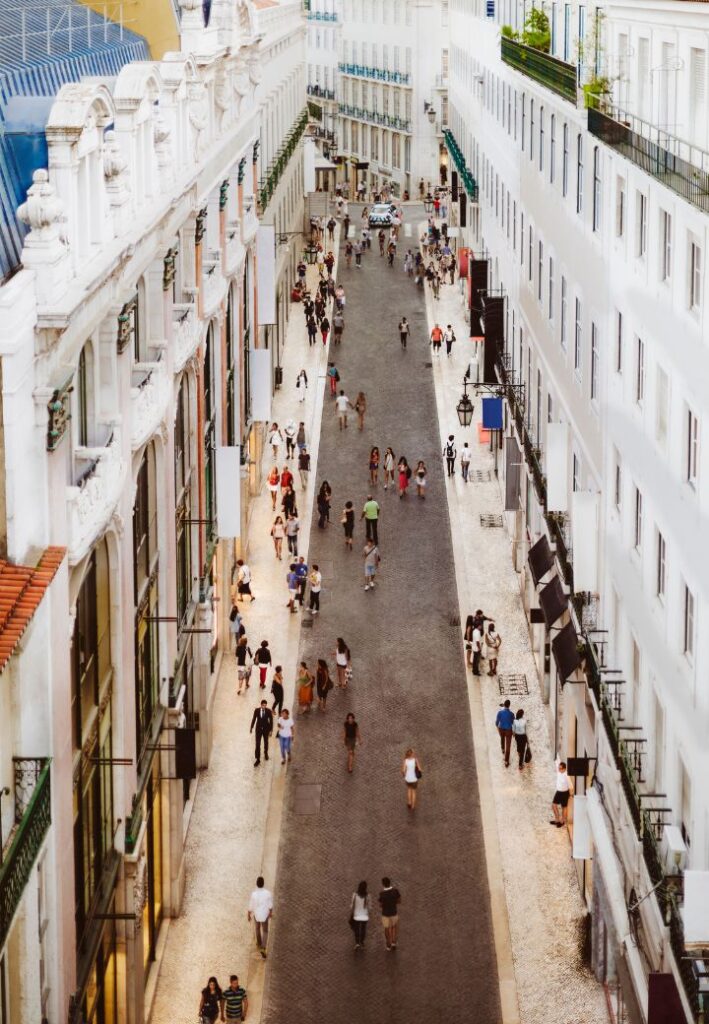
The capital - depth, scarcityand consistent international demand
Lisbon
Lisbon’s luxury residential market is concentrated in a small number of historic neighbourhoods where supply is structurally constrained.
Príncipe Real, Chiado, Lapa, Estrela, Avenida da Liberdade – the city’s historic fabric cannot be replicated or expanded at scale. Renovation-led supply is slow, and new development in central areas is limited by heritage protection.
Median transaction prices in Lisbon reached €5,000 per square metre in Q3 2025, the highest of any municipality in Portugal. Apartment prices grew 22 percent year-on-year over the same period. Buyers who understand the scarcity dynamic in specific neighbourhoods are positioned differently from those who treat this as a standard urban market.
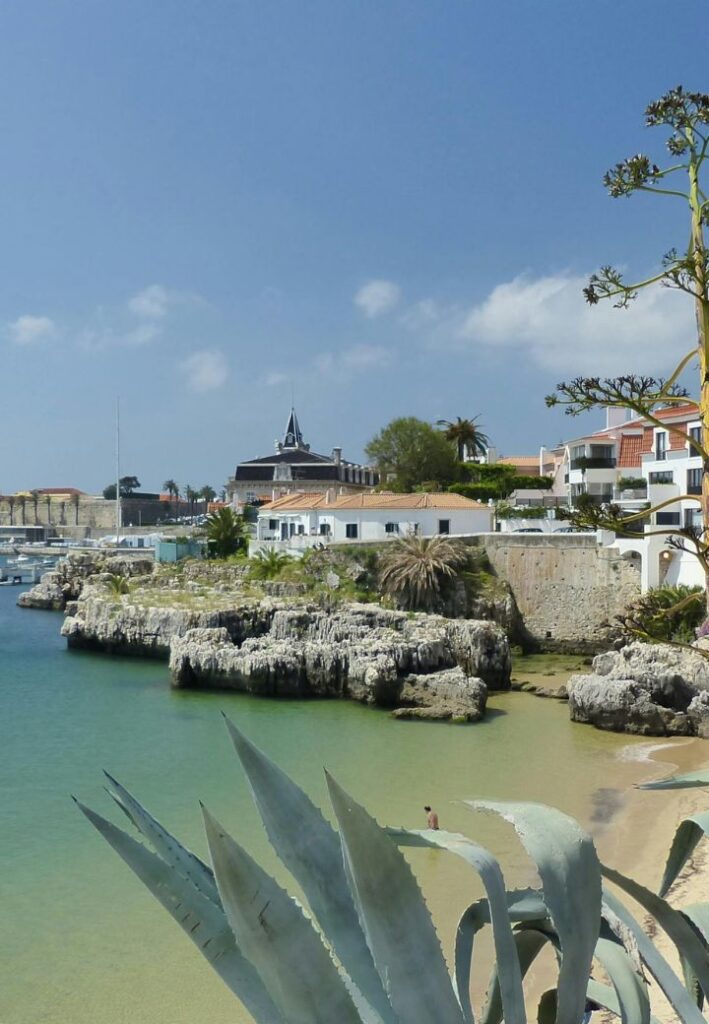
The Atlantic coast - a different buyer profile, distintic conditions
Cascais
Cascais sits 30 kilometres west of Lisbon along the Atlantic coastline and operates as a distinct market with its own buyer profile. The municipality combines proximity to the capital with a lower-density, coastal character that appeals to buyers prioritising quality of life alongside accessibility — families relocating from the United States, the UK or Northern Europe, alongside investors drawn to the area’s consistent international demand.<br>
Cascais is the second most expensive municipality in Portugal by median transaction price – €4,713 per square metre in Q3 2025.
The market rewards buyers who understand both the local documentation and the specific dynamics of the area’s most sought-after addresses.
| Lisbon | Cascais | |
|---|---|---|
| Character | Urban, historic, high-density | Coastal, lower-density, Atlantic |
| Median price (Q3 2025) | €5,000/m² | €4,713/m² |
| Supply constraint | Heritage protection, limited new development | Constrained coastal inventory |
| Primary buyer profile | International investors, urban relocators | Families, lifestyle buyers, second-home buyers |
| Distance from Lisbon centre | — | 30 km west |
| Market dynamic | 22% YoY apartment price growth | Consistent international demand |
On the ground in both markets - not from a distance
Fernanda Silva has been based in Portugal since 2021 and works the Lisbon and Cascais markets from the inside. Not remote advisory. Not occasional market visits. Active presence, established professional relationships and direct familiarity with the documentation, the legal process and the way negotiations move in this specific context.
Her practice is entirely buyer-side. When she takes on a mandate, there is one interest in the room: the buyer’s. She coordinates the legal, fiscal and due diligence professionals each acquisition requires and remains present from the first conversation through to the final deed – in Portuguese and in English.
She is affiliated with RE/MAX Siimgroup in Portugal, which provides the brokerage structure and market access the work requires. What she brings to that structure is the judgment, the local knowledge and the buyer-side commitment that protects decisions of this scale
Where this market makes sense
Portugal tends to be the right market for buyers whose situation aligns with one or more of the following:
- A primary objective of lifestyle, residency or long-term capital preservation
- A timeline that allows for a deliberate process of 60 to 120 days from agreement to deed
- An interest in a market with structural scarcity and consistent international demand
- A capital structure that benefits from Portugal’s fiscal framework for foreign residents
- A preference for architectural depth and European urban character over newer residential development
Frequently Asked Questions
Yes. A NIF, Portugal's tax identification number, is required before any property transaction can proceed. Non-EU buyers are also required to appoint a fiscal representative in Portugal. Both can be arranged before arrival and are typically handled by the buyer's legal representative as part of the acquisition preparation.
The Promissory Contract, known in Portuguese as the Contrato de Promessa de Compra e Venda, is a binding agreement signed before the final deed. It establishes the purchase price, payment terms and timeline, and is accompanied by a deposit that creates legal obligations on both parties from the moment of signature. It is the stage where due diligence should be complete and the buyer's position fully protected.
For a well-prepared buyer with legal representation and fiscal coordination already in place, the process from signed Promissory Contract to final deed typically takes between 60 and 120 days. The timeline extends when preparation is incomplete or when documentation issues surface after the process has begun.
Both markets are in consistent demand from international buyers, but they serve different buyer profiles. Lisbon offers urban density, architectural depth and a concentration of historic inventory in a small number of sought-after neighbourhoods. Cascais offers a coastal, lower-density environment with strong quality-of-life indicators and proximity to the capital. The right choice depends on what the acquisition is meant to deliver in practice.
If you are considering an acquisition in Lisbon or Cascais – as a primary residence, a second home or a capital allocation decision – the starting point is a private conversation to understand your situation before anything else is evaluated.